
The second coming: The hope of Advent

We are accustomed to Advent. It is the season that is all too familiar to us. It is of course the forerunner of Christmas in our minds. It conjures up holiday images of thanksgiving of, giftgiving, of togetherness, family, and blessedness. We are used to thinking of Advent in this way. It is the time for Christmas carols, for Christmas decorations, for good cheer and good food.

All this might be well and good. But it truly has nothing to do with the meaning of Advent. For Advent is about expectation. Advent is about a coming. Advent is about a life lived in a sort of nonsensical hopefulness, an irrational expectancy in the face of uncertainty, fear, and death. Advent is about longing. As our prophetic text has it today: “Oh that you would tear open the heavens and come down, so that the mountains would quake at your presence!”

You see, before Advent leads to Christmas, before expectancy and longing for liberation lead to new creation, before all these there is uncertainty, doubt, forlornness, sorrow, despair. The season of Advent calls us out of our rush to Christmastime sentimentality. It tells us to tarry with the unfinished nature of our lives. It asks us to take the time to grieve and to cry out. It refuses to prematurely suture our wounds. The demands that our hope be a deep hope, one that goes all the way down to the root. It calls us away from shallowness, from easy hopes for small transformations, for manageable, spiritual, little victories.

The longings of the prophets were deep longings. They were longings for a total liberation, for the thoroughgoing transformation of the world into the dwelling place of God. Likewise the hope of the people of Israel at the time of the birth of Christ was a deep, desperate hope. It was a hope for tangible deliverance from tangible slavery and suffering. It was a hope for real and true freedom from real and enslaving forces of domination. It was not a quaint spiritual hope for a spiritual savior to take care of our spiritual problems and help us in our generally good lives.

No, at the root of our faith at the root of our confession that our Lord and Savior was born of the Virgin Mary as a baby, lies deep apocalyptic expectation. An abiding call for a climactic transformation of all that is into something new.

The scandal of Advent lies inside this mystery, the mystery of a child in whom this apocalyptic transformation of the world waits to come about. Behind the manifest weakness of the newborn Jesus lies the manifestation of the New World order that is coming from God. All this must begin with the real, raw, and uncertain hopes that this broken world demands of us. We must begin where we are, in the midst of sorrow and suffering, uncertainty and incompleteness. It is from here that we must cry out for liberation. And it is from here that we must learn to recognize the surprising way God will surely answer us with salvation. And truly it is this surprising act of God to save us that we truly long for, as the prophet speaks of: “awesome deeds that we did not expect”!

Amidst the failures of human projects and power, politics and procedures, the hope of Advent comes alive as true longing, longing for fundamental change and transformation of the world. Amidst the wreckage of the earth, from the edges and corners of this ravaged world comes the hope of Advent. The hope for the tearing open of heaven and the shaking of the mountains, the hope for the upending of every status quo, the defeat of all powers of domination. In the face of devastation and victimization comes the hope of Advent, the hope for a transformation and liberation that can barely be imagined, that can only hoped for, only be longed for — that only a decisive act from God alone can bring.

Advent is a time of apocalyptic longing, of sitting amidst the fragments of this world and the fragments of our lives and longing for a fundamental change in the face of it. It is a word that is always in season in the midst of our human games of power and politics, of idolatry and ideology. It is the same expectancy that runs through Yeats’ poem, “The Second Coming”, written in the wake of the devastation of WWI. Amidst the ruins of the optimism of the 19th century, the world was thrust into despair, and apocalyptic longing as the 20th century dawned in blood and destruction:

Turning and turning in the widening gyre
The falcon cannot hear the falconer;
Things fall apart; the centre cannot hold;
Mere anarchy is loosed upon the world,
The blood-dimmed tide is loosed, and everywhere
The ceremony of innocence is drowned;
The best lack all conviction, while the worst
Are full of passionate intensity.

Surely some revelation is at hand;
Surely the Second Coming is at hand.
The Second Coming! Hardly are those words out
When a vast image out of Spiritus Mundi
Troubles my sight: somewhere in sands of the desert
A shape with lion body and the head of a man,
A gaze blank and pitiless as the sun,
Is moving its slow thighs, while all about it
Reel shadows of the indignant desert birds.
The darkness drops again; but now I know
That twenty centuries of stony sleep
Were vexed to nightmare by a rocking cradle,
And what rough beast, its hour come round at last,
Slouches towards Bethlehem to be born?

The poem speaks of the incoherence and failure of the modern world amidst the destruction that humankind has brought down on itself. It looks to the world and sees a desolate place, a desert haunt in which bestial powers and darkness are the norm. And yet, precisely in this place, the place of incoherence and lost innocence, the place of desolation and destruction, the poet looks, longingly for a revelation, for the coming of something new, reminded of a rocking cradle that upended twenty centuries of stony sleep. Even as it looks for a rough beast, slouching towards Bethlehem to be born, for some strange new power to arise, it is this rocking cradle that haunts the poet’s memory. This unexpected gentleness and vulnerability that cannot be assimilated to the world of beasts and powers, of domination and subjugation.

So also did the prophet long for the climactic tearing open of the heavens, for the shaking of the mountains, and the overturning of the nations. And just so, in the face of the hope of Advent, God did truly come, and promises to come again. But this coming was not the one we envisioned. No, no. This above all was the awesome deed we did not expect: That the climactic, apocalyptic invasion of God to liberate and transfigure the world came, not in power as we know it, but in the form of the least of these, the most vulnerable of the world’s humanity. God’s coming, God’s faithfulness to come and save us, and come through on our every hope, our every longing, our every outcry was so strange to us, so unbelievably unexpected, that we humans would ultimately respond by rejecting it with crucifying malice.

But this is truly the grace, truly the word of hope on this side, between the Advents, that God’s coming to us, God’s fulfillment of the world’s hope did not come on our terms. The rocking cradle and the empty cross do indeed vex us to nightmare, and just so does the living Jesus and the empty tomb call us out of our nightmare-bound sleep and into new life, a life we could not have expected or imagined. And just so it calls us into new hope, a hope that realizes, in the face of God’s surprising coming to us, that our hope on our terms tends to lack imagination. God comes to meet our cries for the transformation of the world as a baby. And God comes to us when we have become crucifiers saying “Peace be with you. Do not fear!” This is the God who is coming to us. The God of the cradle and the cross. The God who saves us, not with power, but with the glorious powerlesness of unbounded, self-abandoning love.

So as we enter into the story of Jesus again, this new year, enter it as we must enter it if we are to be honest:

  • Come with longing.
  • Come with sorrow.
  • Come with incompleteness.
  • Come with failure.
  • Come with depression.
  • Come with anger.
  • Come with despair.
  • Come with uncertainty.
  • Come afraid.
  • Come vulnerable.

Come into God’s story where we are, in the midst of the flaming fragments of this world, crying out with all creation for newness. Do not shrink back from truly crying out, from truly longing, from feeling the depth of our need for transformation. And in that moment and in all the moments that follow after it, prepare yourselves to be surprised when God does come on the scene to save and to heal and to restore us. God is truly coming to us, but it may not be the coming we seek. It may come to us in the form of one of the least of these. Or in the form of a brother or sister, perhaps the one you don’t want to have it come from. Prepare yourself to be surprised by how and where and in whom God will come to you to call you back to the life of the kingdom.

But our great comfort, and our great hope, the hope that Advent also reminds us of is this: That even if God’s coming is not what we would expect, project, construct, or desire, it is coming nonetheless, and our ability to fail in recognizing it does not go as deep as far as God’s unfailing love, the love that will transform all things into life. The good news of Advent is that God is truly coming in Jesus and that this will truly surprise and shake us up into new life, no matter how much we may misunderstand or fail to see. This Advent give yourselves again to hope, and in hoping, give yourselves to receive God’s surprising, unexpected way of coming in response to our hope. For this indeed is our good news, that the kingdom of God will surprise us, will transform, and will go beyond our any of our wildest hopes.
Things that may never come… (Part 2)

Enough sermonizing about me and my lifelong identity crisis. Because there is no me alone any longer, for you my Love are forever part of me now. And just so my defunct hormone cascades are not just mine, but yours, ours. My feelings of terror, humiliation, and powerlessness are no longer mine, but ours.

And this drives home that fact that at the heart of life lie joy and sorrow. I have never been more glad to have my deepest fears and fragilities shared and born by the one who has chosen and vowed herself to me. And I have never been more sorry and sad to have foisted my burdens upon the one whom I only ever wanted to lift up, to carry, and hold above the fray of this violent world of crushing and grinding. It was that old self-idea I had all along that fed this of course. As if there is any point above the fray, out of the crushing, away from the grinding. No, my Love I know now that the point is simply that we we are in the fray together. That come the crushing, come the grinding, come the hospital beds and hours of waiting silence, we are together. So many follies have led us to this point, but blessedly, somehow, despite ourselves, we are here now, together. And so we can mourn and hope together. This shared fragility binds us in our unknowing and uncertainty, our sorrow and our joy.

I remember everything. I remember all the things that may never come, thanks to this unknown and unexplained growth in the recesses of my brain. I remember how terrified and uncertain you may never get when somehow our IUD short-circuited and we wound up pregnant by mistake. I remember the tears you may never cry over whether you could possibly be a mother (you could, but that’s another argument we may never have). I remember my ear that may never be pressed up against your belly, listening for heartbeats and little kicks from a life that may never grow inside. I remember that I may never watch you, clinging helplessly to your hand as you deliver a new life into the world from your own body. I remember the first steps our baby may never take, the first date she may never have, the first car accident he may never perpetrate. With all the joys and sorrows of this life, and the life that may be, and the lives that may not be, I remember these. They are ours, as the uncertainties, the fragile (im)possibilities that may or may not be.

Of course my persistent shadow self bucks against all this. It makes me want to claw my scalp off because I cannot secure anything for you or for me. What a great and terrible powerlessness this is! The only thing that could probably put it in perspective would be real powerlessness, which we have very little acquaintance with. But even so, in the midst of our white, first world dilemma we are, it seems, being brought into some true touch with real fragility, and so, I believe, with real love.

I find myself able only to give you myself, with all the unknowing of what self that may become or cease to be. I give you my weakness, for that is what I know I have left. At the center of my brain, in the patched hole in my heart, in the feeble self-constructs of my psyche, I know only that weakness remains, and by grace it remains in love. Its gift is to bring illusions of power to an end. And so I offer you my weakness, and I promise to receive yours. I will remember all that may not be, and all that never really was, and in this weakness I will hope for absolutely all that may be, and that always truly was. I will believe with you, even when I fail to believe, that God really did choose that which is weak in this world to shame the strong, and the things are not, the things that may not ever be to bring to nothing the things that are secure and established.

With all that never really was, and all that may never come for us, I am yours. I am a terrified five year old, a preacher, a backpacker, a runner, a potential brain surgery patient, a testosterone-deprived, exhausted man, an immature 8th grader laughing about butt jokes, a 16 year old who knows that no girl will ever love him. In all this, I am yours. Regardless of what never really was, or what may never be. Together we will receive what was, and what is, and what is to come.

How it never really was… (Part 1)

Everything would be easier without that irascible background noise of arrogance. Or so I tell myself. Maybe that’s the arrogance talking. I guess it’s not really for me to say. Others can, and if the past is any indication, the will let me know. But let me tease this out anyway and see what comes of it.

When I was 5 years old the doctors sawed open my rib cage and busily set to work patching a hole in my heart. I was born with that hole. On account of this hole, when I was born they told my 27 year old mother that, if I turned blue, to please bring me back to the hospital. Years later I learned that she stood by my bedside until she couldn’t hold back the sleep any longer, and finally went to bed, entreating God that if I turned blue in the night while she slept that God would wake her.

I never turned blue. God was merciful to at least this new mother. But when I grew, I couldn’t really run. Air always came in gasps.  The heart doesn’t do well with holes in it, hence the medically supervised rib cage sawing that took place in my 5th year. I remember a good bit of it. The foam donut-shaped pillow that my head was placed on as I was wheeled down the hallway so that my chest could be cut open. I definitely thought that pillow ridiculous.

They asked me to count to ten as they placed the gas mask over my nose and mouth. My five year old will, ironclad and implacable was determined to make it all the way to ten. I think I made it to 4. I woke up with feeding tubes sticking out of my stomach and a row of weird looking tape going from my sternum to a few inches above my belly button. The tape was itchy, but they told me they usually used staples, so I felt pretty thankful overall. When the time came for the feeding tubes to be removed, the doctor gave the clear instructions to “give me a yell” to which I vigorously compiled each time one of the tubes was yanked from my young stomach.

I was quite certain that my determination to be brave and strong played a big role in my recovery. The fact that I could run without gasping and doubling over anymore after I got home made me more certain of that fact. I was quite sure that now, with my heart all stitched up and repaired, I could do whatever I might desire if I were to continue to apply my determined five year old will, ironclad and implacable.

My teenage years served as a good time of reinforcing this supposition. The cardiologist told me when I was 12 that due to my heart murmur my body might not be as efficient at vigorous physical exercise. My dad sat by my bed that night and told me that maybe my calling wasn’t to physical prowess but something more spiritual or intellectual. As soon as he closed the door I determined, in the dark of my preteen bedroom that such cautions would be no match for my self-determination. Within a few years I’d earn that adolescent black belt in karate, master the splits, and break blood vessels in my eyes from doing too many handstand pushups.

As I went through college and became some sort of adult, I carried this insistence on my own strength and ability and will into everything. I learned a great deal about sacrifice, about dying to self, about self-giving, and self surrender as I went along. It was growth. But under it all that strong, able self that I imagined as myself hung on at the foundations.

I have gone through life clinging to this primal  illusion of control and competence. I was one who always had the ability to handle life. I had certainly learned that it wasn’t so good to be excessively cruel or abrasive, and that love and self-denial is a more truthful and compelling way for me to live my competent and controlled life. But one thing was for sure: I was no terrified five year old being wheeled into a surgery I couldn’t possibly understand or control.

From age 17 to 34 I never went to see a doctor. Well, except for a couple times when I got paranoid that my heart was about to stop pumping and went to the emergency room only to be told that I was fine and to go home. Little outbursts of fragility that only twice broke into my competent certitude that I had control of my body, my life, my self.

That pretty much brings us up to date. That is the arrogance that has formed the background noise of my life. And how clearly a fiction it is now. So false it suddenly appears as I find myself unable to walk up hills without stopping every 15 minutes to gasp for air like some pathetic 5 year old with a hole in his heart. Determination, discipline, self-control, workout and diet plans are all showed up as impotent when confronted with an MRI telling me that my brain can’t work quite right anymore, regardless of how much I will it.

Someday soon I may find my head resting on a donut shaped foam pillow again. But this time, as I am wheeled down under fluorescent lighting, whether for biopsies or brain surgeries, I hope that I will not feel that enduring misguided need to be brave and determined. Perhaps I can just fear the unknown like any five year old. And hope for a tomorrow that will be greater than all these yesterdays like any five year old. Maybe I’ll be able to run again after it’s all said and done again this round at the hospital. And maybe not. But either way, from here on out I’ll take it all as gift. If this is what it takes to disabuse my of the illusions that cling so closely, the fantasies of control, self-determination, and competence that have dogged me this whole time, then blessed be the Name beyond all names. Whether I get to run again, get skinny and strong again, or whatever at least now I know that I’ll go out singing. And that is more than enough.

Manifesto at midnight

Be now
about that which
you must
be.

The time is far at hand
to lay waste
the illusions that cling
so
closely.

Kill now
the illusion which you have
cradled.
Let it rest, quiet and
dead.

Awake into the vibrance
of peace.
Feel its vibrations,
hear its silence

And sing, free.

Enjoy the shedding.

Truth your way to the reality
that has
always
been at hand.

Be it now.
And let the dead
powers
lie.

Who are the crucified people among us?

James Cone speaks powerfully of what it means to truly understand redemption, both personal and social, spiritual and cosmic, as coming through the cross of Jesus. According to him a twofold imagination is required to actually live out and believe the idea of life arising out of death, newness out of darkness:

One has to have a powerful religious imagination to see redemption in the cross, to discover life in death and hope in tragedy. What kind of salvation is that? No human language can fully describe what salvation through the cross means. Salvation through the cross is a mystery and can only be apprehended through faith, repentance, and humility. The cross is an ‘opening to the transcendent’ for the poor who have nowhere else to turn—the transcendence of the spirit that no one can take away, no matter what they do. Salvation is broken spirits being helped, voiceless people speaking out, and black people empowered to love their own blackness.

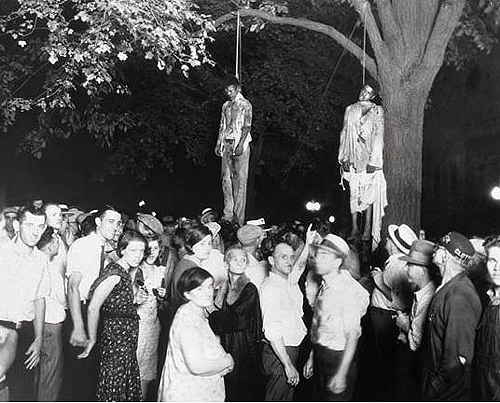
And yet another type of imagination is necessary—the imagination to relate the message of the cross to one’s own social reality, to see that ‘They are crucifying again the Son of God’ (Heb 6:6). Both Jesus and blacks were ‘strange fruit.’ Theologically speaking, Jesus was the ‘first lynchee,’ who foreshadowed all the lynched black bodies on American soil. He was crucified by the same principalities and powers that lynched black people in America. Because God was present with Jesus on the cross and thereby refused to let Satan and death have the last word about his meaning, God was also present at every lynching in the United States. God saw what whites did to innocent and helpless blacks and claimed their suffering as God’s own. God transformed lynched black bodies into the recrucified body of Christ. Every time a white mob lynched a black person, they lynched Jesus. The lynching tree is the cross in America. When American Christians realize that they can meet Jesus only in the crucified bodies in our miles, they will encounter the real scandal of the cross. (The Cross and the Lynching Tree, 158-59)

I think Cone’s challenge to Christians in America, particularly white Christians in America is the right one, and it is rightly framed under the call to powerful imagination. What if our fundamental task is to be able, through this double imagination of the cross to discern where are the crucified people among us? And then to learn how to be among them, to stand with them, to cease recrucifying them, and instead work with them unto a new life that we await, imagine, and hope for?

Are we really interested in looking to see where the crucified people are among us? Or does that sort of imagination ultimately not interest us? Do we really just not want to see the recrucifying with which we are all complicit, whether passively or actively? I know I don’t care for seeing such things. But we must if we are to be able to imagine redemption in a truthful way. Cone is right. A powerful imagination is indeed necessary. Who are the crucified among us? This needs to become our constant question and search and commitment.

Reflections on remaining with Shelly Rambo

Lately I’ve been engrossed in Shelly Rambo’s deeply important book, Spirit and Trauma: A Theology of Remaining. I’ll have more to say about it later on, but for now, I have a few reflections on the many thoughts that this book stirs for me. In brief, Rambo articulates an attempt to think through the problem of suffering through the lens of trauma. What distinguishes trauma from suffering in general (in brief) is that trauma is a suffering that remains after the initial event is long past. Trauma persists with the sufferer in a way the runs through their life inescapably. There is no longer simply a straightforward progression from past suffering into a healed new life. Rather there is an interstitial space that is opened up in trauma, a “middle space” in which death and life are co-mingled and intertwined. For the traumatized, life and death no longer oppose one another in a straightforward way, temporal or otherwise, rather they exist together. Death is now shot through all of life, and life, somehow endures, remains in the midst of death.

It is through thinking this “middle space” that Rambo enters into dialogue with the Johannine discourse of abiding and the Spirit, and the Christian tradition of Holy Saturday, the day between cross and resurrection. Through all of this Rambo argues that we must displace the figure of Jesus and of a vision of redemption that moves in a straightforward way from death to “triumphant new life” and instead learn to theologically think and recognize the suffering that remains, that endures, that stays with us, that leaves us in this middle space, this Holy Saturday between.

I am deeply challenged by Rambo’s reflections, and am still exploring them, but I wonder about her thoroughgoing valorizing and perhaps festishizing of this notion of the “middle space.” In her book it seems that any attempt to think the resurrection or new creation, or any kind of triumph of life over death on the other side of this middle space elides and covers over the reality of the middle space, thereby betraying and suppressing the true reality of traumatic suffering. This is critique I think we need to really reckon with.

However, it seems fundamental that there is, inherent to the reality of occupying the “middle” of remaining in the abyss of trauma, of the unresolved and unresolveable, an attending  yearning, a hoping that cries out, not for survival, or persistence, but for radical newness. Inhabiting the nullpoint, the zone of death, the Holy Saturday moment cannot create a stable “middle” but rather names movement-in-remaining-together, an abiding that looks beyond itself, a remaining that remains only as it yearns. To remain without yearning for the genuinely new, without really and truly yearning—not in a metaphysical, but in a profoundly historical, existential, and fundamentally personal sense—is to be ossified, immobilized, left merely to spin for ourselves spiritual forms of propaganda that might satiate our despair. Rambo speaks of a vision of love as remaining in this middle space as “survival.” Yet I am left wondering if this casting of abiding love as mere survival can ever be good news to those who truly live with unending suffering and trauma. Is survival enough?

I would hope that to yearn for the genuinely and radically new is not to deny or elide the traumatic and enduring reality of the depths, but rather to dare to cry out for every depth to be lifted up, and likewise for every high place to be made level. Indeed, can we not only inhabit the depths, the day of silence, the “middle” in the mode of yearning? Is it not that yearning that alone establishes this space as something that can be meaningfully called a “middle”? Can we really have a middle space without something that comes after it to cast it as truly a middle and not simply the inderminate end that eats us and exhausts us?

What if the very naming of these depths as a “middle” speaks of the ultimate act faith, an act of utterly audacious hope? It dares to name what, by all appearances is an irrevocable and omnivorous end as something else, as a space into which the new may irrupt in as yet unimagined forms. To speak of remaining in the middle, in the depths is to speak of a very odd kind of remaining indeed. It is to speak of a remaining that can never be satisfied with mere perdurance, mere survival. It is to speak of a remaining that remains precisely as a mode of lived hope that can only appear in this world of life-in-death as utter foolishness. And yet might it be perhaps that only such foolishness that can truly, patiently, for the long haul, remain?

To remain, to abide in this mode, this mode of apocalyptic yearning, is to remain unsettled, to remain ever ready for action and for new calls to action, risk, and yes, even to open ourselves to further suffering. It is to continue to hope even when one does not know how to draw breath for the next moment, when one cannot “bear the thought of enduring another day” (Craig Keen’s phrase). It is to know an unshakeable love, only known as such because, in being utterly bereft, so utterly broken, so utterly hapless before the burdens of the this life, we find ourselves unable to turn away from those we find ourselves remaining alongside. To remain in yearning is to somehow find oneself acting in faith, somehow believing for inarticulable reasons (with sighs too deep for words) that the suffering of these dark days, weeks, and years is somehow not the harbingers of an end, or of a never-ending middle, but rather the last futile struggles of a defeated death, somehow promised to be transformed into life.

Remaining, abiding, the vitally important theme of Rambo’s work, I would suggest names not a mode of resignation to an eternal middle, not a struggle for survival in a Holy Saturday that never gives way to Easter, but rather the evernew gift of finding oneself actually being resurrected in the midst of death. We remain, not because there is a way to make it through, not because we can endure by survival (Rambo’s claim), but because, precisely having no ability, no potentiality, no hope of ever making it out, of ever surviving, we yearn for the genuinely new. And we yearn with a yearning that somehow, again, inarticulably, is met. This meeting, though eludes our grasp and denies us any stable possession of it. It comes to us as life, as promise, as hope, as transfiguration, and yet, in the end all we can say for sure is that it comes to us. This, this grace, meets us. And it is this meeting, this inability to deny that our yearning has been met with something, with something beyond all that we could ever ask or think, it is this stumbling block, this foolishness, that impels us on, that calls us to remain, to abide in the shadow of death, and somehow, idiotically, to hope and work for new life.

This is the vision of remaining that I can wholeheartedly affirm, and Rambo’s reflections are helping me to search this out afresh, even where I think, in the end I part company with her in crucial ways. But more to come on that later.

Being shaken by James Cone

I’ve always enjoyed the work of James Cone. Since reaching his Black Theology and Black Power, A Black Theology of Liberation, and most of all God of the Oppressed in my seminary days, I’ve always considered him a vital theological voice that “white Christians and their theologians” as Cone would say (i.e. me and most of the people I know) desperately need to really take the time to hear. His God of the Oppressed remains, I am convinced, one of the most important works in christology of the 20th century, and deserves far more attention than it gets.

But having now finished his more recent work, The Cross and the Lynching Tree, I find myself stunned and shaken. Not because I didn’t know what Cone’s argument was before I began reading, and not that I didn’t know that I basically agreed with it already, which I did. (The argument in a nutshell: “The cross and the lynching tree interpret each other. . . . Can the cross redeem the lynching tree? Can the lynching tree liberate the cross and make it real in American history?” [p. 161]. Cone believes it can and powerfully shows why he does.)

No, the reason I find this work so shaking, so powerful is because it seems to be a work of memory that is truthful and profoundly hopeful at the same time. It dares to go all the way into the void and yet still call forth the transcendent hope of the transforming power of the Gospel to redeem the horrors and holocausts of history in their worst possible forms. And it doesn’t get much worse than the up close and frank stories of the lynched black bodies that are strewn across recent American history. His account the lynching of Mary Turner, a pregnant woman, wife to a lynched man named Hayes Turner will remain branded in my memory as one of the more horrifying stories I have ever read on a page (p. 120).

In the concluding section of the book, Cone really brings things together powerfully, in a way that frankly left me in awe (a rarity for conclusions of theological books). A few segments may help paint a picture:

As I see it, the lynching tree frees the cross from the false pieties of well-meaning Christians. When we see the crucifixion as a first-century lynching, we are confronted by the reenactment of Christ’s suffering n the blood-soaked history of African-Americans. Thus, the lynching tree reveals the true religious meaning of the cross for American Christians today. . . . Yet the lynching tree also needs the cross, without which it becomes simply an abomination. It is the cross that points in the direction of hope, the confidence that there is a dimension to life beyond the reach of the oppressor (p. 161-62).

What is so striking to me in Cone’s work here is the way in which faith is so palpably honest and real, clearly flowing from a life that has actually wrestled with the non-theoretical darkness and hopes for non-theoretical new life. This is a faith that is daring, a faith that screams “Why?” against oppression and slavery and cries “Hallelujah!” in hoping for a true transformation of life to come. This is a faith that actually looks for a transformation of victims and oppressors rather than simply an inversion of that diabolical relationship:

The cross of Jesus and the lynching tree of black victims are not literally the same—historically or theologically. Yet these two symbols or images are closely linked to Jesus’ spiritual meaning for black and white life together . . . Blacks and whites are bound together in Christ by their brutal and beautiful encounter in this land. Neither blacks nor whites can be understood without reference to the other because of their common religious heritage as well as their joint relationship to the lynching experience. What happened to blacks also happened to whites. When whites lynched blacks, they were literally and symbolically lynching themselves—their sons, daughters, cousins, mothers and fathers, and a host of other relatives. Whites may be bad brothers and sisters, murderers of their own black kin, but they are still our sisters and brothers. We are bound together in America by faith and tragedy. All the hatred we have expressed toward one another cannot destroy the profound mutual love and solidarity that flow deeply between us—a love that empowered blacks to open their arms to receive the many whites who were also empowered by the same love to risk their lives in the black struggle for freedom. No two people in America have had more violent and loving encounters than black and white people. We were made brothers and sisters by the blood of the lynching tree, the blood of sexual union, the blood of the cross of Jesus. No gulf between blacks and whites is too great to overcome, for our beauty is more enduring than our brutality. What God has joined together, no one can tear apart. (p. 165-66)

This, I think, is an authoritative word of a truthful faith. If James Cone can believe that, then I hope I can live towards the same daring faith, the same truthful memory. I hope we all can find our way towards it.

Remembering Mama Kelly

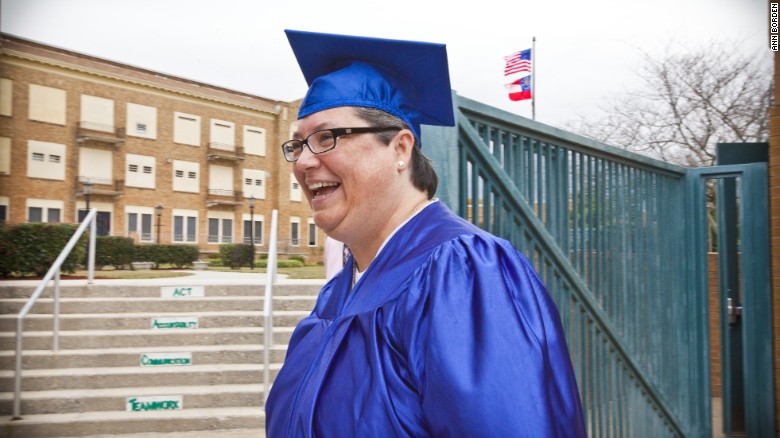
It was exactly one year ago that I spent about an hour or two recounting some poor version of the story of the life and death of Kelly Gissendaner. She had been murdered under the law by the State of Georgia on September 30th of that same year. I remembered Mama Kelly, as she was called by the many women and girls who she loved, nurtured, and cared for in prison as a saint, as one of the faithful followers of Jesus whom we celebrate in the small churches that I hail from every year around this time. I wanted to remember her again this year, a year later. Mama Kelly is countless news cycles behind us now, but the love, her love, Jesus’s love that she branded into the lives of so many lives on, as does the witness of her death at the hands of the state.

The New Testament speaks of Jesus’s death as putting the powers to shame, putting them on display: He disarmed the rulers and authorities and made a public spectacle of them, triumphing over them in [the cross]. (Col 2:15). Kelly follows Jesus in this. In her death at the hands of an implacable, resolute state intent on killing, her life of transformation, love and hope “make a public spectacle of them” as well. The story of her life, new life, and death speak to the truth that the powers of this world are intent on death rather than justice, and that even in the face of absolute newness of life they will continue to deal death.

But death has no enduring power against witness. Kelly’s witness lives in her words, in the lives of the women and girls who were prisoners with her, many of whom are alive and living now because “Mama Kelly” would sit with them in their times of darkness. Her witness is alive in the lasting impact she made on the theologians who were her teachers, alive in her children who were transformed along with her from hatred and bitterness into love and reconciliation.

All of this shames and scandalizes the gods of power. It puts the truth on full display and cuts through the lies of the powers of this present time, this present country. It shows the forth the hollow veneer that America’s legal and judicial system in fact is. It puts on display beauty of God’s justice, the justice of repentance, reconciliation, and new life. This is Kelly’s beautiful witness. That the new life that God brings to the world in Christ is more determinative than any sin or any crime we commit. That state disagrees, with cold lethal ferocity. Nevertheless, the witness stands, and continues to speak.

Kelly believed and lived unto the truth that God brings to us a future that is undetermined by the past. That in God there is hope and life and calling for us all, regardless of the chains of the past. Her life stands as witness to that truth. She bears, in her life, death and coming resurrection with Jesus, and with all of us the revelation of the Lamb that was slain, who is worthy to receive power. That is faithfulness worthy of celebration and remembrance.

The family of god?

Jesus said, “Truly I tell you, there is no one who has left house or brothers or sisters or mother or father or children or fields, for my sake and for the sake of the good news,  who will not receive a hundredfold now in this age—houses, brothers and sisters, mothers and children, and fields, with persecutions—and in the age to come eternal life. (Mark 10:29-30)

There is a basic claim in the gospel message of Jesus, that we cannot avoid or ignore: the natural biological family can never come first for followers of Jesus. Family stands underneath Jesus’s call for total commitment to God’s coming kingdom. What this may mean in different contexts, times, and places will certainly vary, but I would suggest that there is a core truth in Jesus’s statement, which is echoed in different ways throughout the New Testament, namely that in every place and in every time, the Gospel challenges and re-shapes natural relationships, even and perhaps especially, the natural family relationship.

In fact, it is important to remember that the New Testament as a whole has little, if anything positive to say about the natural family as such. Instructions to families and family members consistently are framed within the larger call to the church members about how to relate to one another (submit to one another, be kind to one another, do not provoke one another, etc). The primary bond is always the bond of discipleship, the brother-sisterhood of Christ that is lived out in the peoplehood of the church. Natural families are not cast aside or rejected, but they are relativized. Families are secondary and penultimate. The brother-sisterhood of Christ, the familihood of the church is what is primary and ultimate. The message of the gospel, as Jesus and the apostles preached it is never one of “family first” or “focus on the family.” Rather natural family only has meaning in the context of the more basic, fundamental relationship that we share as brothers and sisters of Christ in the family of God. This is reflected in Paul’s opening call in our reading this week from Romans 12:

Therefore, I urge you, brothers and sisters, in view of God’s mercy, to offer your bodies as a living sacrifice, holy and pleasing to God—this is your true and proper worship.  Do not conform to the pattern of this world, but be transformed by the renewing of your mind. Then you will be able to test and approve what God’s will is—his good, pleasing and perfect will.

Now this may sound compelling and beautiful, and so it is. However, there is great risk in diving in and embracing this vision of the church as real and true family, and that is the risk of real and profound loss. The great comfort of the natural family is the perceived security, permanence, and stability that it commands. Spouses make vows to one another, that even today are harder to dispense with than other forms of relationship. The parent-child relationship is biological and one-sided. Children live for years and years in dependence on their parents, and as such this relationship is not likely to be easily severed. Natural family is a great draw because it feels safe, solid, given. The relationships of natural family feel safe because in them we feel we have control.

Relationships in the church however, especially today are much more transient, tentative, open to revision–more risky. Do we really dare to say, as Jesus does “Who are my mother and my brothers? . . . Here are my mother and my brothers! Whoever does the will of God is my brother and sister and mother” (Mark 3:33-35)? The closeness of the family bond involves vulnerability, openness, and being truly and deeply known. There is risk in opening that relationship outward to embrace others, others who didn’t grow up with us, who we didn’t birth and raise, who we didn’t spend years getting to know ahead of time before we threw in our lots together as spouses. Opening up that relationship means risk: the risk of loss, of betrayal, of conflict, of alienation.

And so the church has tended to settle for less to avoid this risk. We retain walls and boundaries of safety between each other to protect ourselves from the possible pain of losing one another and hurting one another. What happens if we make ourselves vulnerable, open our lives fully to one another as family, and then someone, a brother or sister in the truest sense, someone who had become true and real family to us then decides to leave, to take their life elsewhere? We imagine we can avoid the pain of real loss if we avoid the real depth of relationship, relationship in which we dare to actually let ourselves need each other, depend on on each other, become as Paul says “members of one another.” C.S. Lewis spoke well of this risk in his The Four Loves:

To love at all is to be vulnerable. Love anything and your heart will be wrung and possibly broken. If you want to make sure of keeping it intact you must give it to no one, not even an animal. Wrap it carefully round with hobbies and little luxuries; avoid all entanglements. Lock it up safe in the casket or coffin of your selfishness. But in that casket, safe, dark, motionless, airless, it will change. It will not be broken; it will become unbreakable, impenetrable, irredeemable. To love is to be vulnerable.

Do we dare embrace the vulnerability of true brother-sisterhood? This one of the questions with which we must reckon.

However, there is another reason beyond fear of loss and pain that we may avoid Jesus’s call to true brother-sisterhood which we must name and face. Perhaps we do not fear losing our brothers and sisters, perhaps what we fear is truly being stuck with them. What about our autonomy, our freedom, our control over our lives and decisions? To truly bind ourselves to one another as family means embracing the limitations that other people impose on us. Just as natural families limit our horizons and make claims on us that shut down other possibilities, so too does embracing the brother-sisterhood of Christ. We no longer live to ourselves, and we no longer die to ourselves. Here we belong not first to ourselves, or to our natural families, but to each other in Christ. This means being imposed upon, needed, and limited.

And perhaps we just don’t want that. We imagine that we can have genuine, deep, and satisfying relationships with one another while still keeping each other at arm’s length. We imagine that we can have “community” without sacrifice, without the giving up of our American longing for unfettered, self-determining freedom. If we are really to live as brothers and sisters, as family, this may mean that we can’t take certain jobs that would choke off our time to give ourselves to life together. It may mean that I can’t take off for a year to hike the PCT because one of you may need me. It may mean that we can’t take vacations whenever we want so that our resources can support a brother in financial need. It may mean that we can’t have it all–which, if we’re honest we really do expect to be able to do pretty much all of the time. This is a reality we have to reckon with, that we have to truly face and not sweep under the rug. There is a cost to family, and it must be counted if we are really to be all in together.

But in the face of this very real risk and cost stands the word of Jesus’s promise: “Truly I tell you, there is no one who has left house or brothers or sisters or mother or father or children or fields, for my sake and for the sake of the good news, who will not receive a hundredfold now in this age—houses, brothers and sisters, mothers and children, and fields, with persecutions—and in the age to come eternal life” (Mark 10:29-30). The question for is is unflinchingly direct: Do we believe this? Do we believe that the sacrifice, the risk, the limits, and the losses are worth it? Do we believe that we will be given far above what we could ask or imagine if we embrace this vulnerability?

Or do we ultimately believe the world’s story? That we must play it safe, take care of ourselves and our natural family, maybe have friendships, but making sure that they are all well-controlled and distant enough to protect us? That is the question we must wrestle with as we struggle to live out what it means that we really are, in Christ, a true family.

Rivenness: a theology of eucharist

The Lord’s meal is about a body and its blood. The body and blood that the Lord’s meal is about is a body that is broken and a blood that is poured out. Those are the descriptions that matter in the Lord’s meal: broken and poured out. The body of Jesus comes to us broken, torn apart, riven. The blood of Jesus comes to us shed, depleted, poured out. Broken and poured out. This is the nature of the salvation, the life, the freedom that is given to us in Jesus. Jesus comes to us with brokenness and with outpouring. And this is appropriate, indeed it can be no other way for that is the condition into which this world has been plunged. In slavery to powers and rulers, this whole world and every life in it lives a broken, poured out life. Christ comes to us broken, torn apart, because we are broken and torn apart. This life, lived in this world, this world of sin, slavery, and death, is a life of being broken, of finding oneself poured out. Life tears us up. We may pretend at wholeness, we may put on a show of solidness, a veneer of stability, but these are the lies we tell to hide the wounds, the holes that this broken life has torn in us.

Jesus comes to us torn apart. He comes to the torn apart, not as one whole, but as the one most torn apart, the one who freely surrenders his wholeness, who never pretends at a false healthiness. Jesus comes to us broken and poured out, and because of this none of us can ever be alone again in our brokenness. The holes that life has torn open in our flesh, in our hearts, these need no longer be papered over, they need no longer be concealed under a mask of false wholeness. Instead, in the riven body of Jesus, our torn up bodies are liberated into freedom, the freedom to remain torn apart, not unto despair, but rather unto love.

For in Jesus the wounds, the holes that life tears into us are transformed, not closed. The wounds of Jesus remain open after the resurrection. They persist, no longer as a source of pain, no longer as the signs of death, but rather as the beginning of freedom, life, and love.

Christian Wiman writes, “They need not be only grief, only pain, these black holes in our lives. If we can learn to live not merely with them but by means of them, if we can let them be part of the works of sacred art that we in fact are, then these apparent weaknesses can be the very things that strengthen us. Life tears us apart, but through those wounds, if we have tended them, love may enter us. It may be the love of someone you have lost. It may be the love of your own spirit for the self that at times you think you hate. However it comes though, in all these, of all these and yet more than they, so much more, there burns the abiding love of God. “

When we come, then to the Lord’s table, to the Lord’s meal, the meal of a broken body and a poured out blood, let us leave behind the false pretences of wholeness, security, and identity. We are invited, by the riven body of Christ, by the Lord who chooses to be torn apart, to offer our wounds, our own torn apart bodies and lives to him and to each other that, right there, right in the midst of our rivenness, we may become open channels in which love may flow. Come to this table, not to be made whole, not to receive a solid identity, not to receive security and certainty. Come instead that your wounds may be left open, like our Lord’s. Left open to witness to the depth of love and freedom that has been given to us. The freedom to be torn apart in love, the freedom to remain broken, to abide in the rivenness. This is freedom indeed. Freedom from illusion, from pretence, from the arrogance that refuses vulnerability by choosing to construct a false self, to build an identity, to pretend at wholeness. Come to this table to remain broken, to have your wounds left open. Come to this table torn apart, and receive the torn part body and the poured out blood, and in receiving it, offer your open wounds, your own torn apartness, your riven and incomplete lives, and watch them be transformed into open channels, into free and boundless spaces in which the love of God will burn. For the God who comes to us torn apart loves every broken thing.