
How it never really was… (Part 1)

Everything would be easier without that irascible background noise of arrogance. Or so I tell myself. Maybe that’s the arrogance talking. I guess it’s not really for me to say. Others can, and if the past is any indication, the will let me know. But let me tease this out anyway and see what comes of it.

When I was 5 years old the doctors sawed open my rib cage and busily set to work patching a hole in my heart. I was born with that hole. On account of this hole, when I was born they told my 27 year old mother that, if I turned blue, to please bring me back to the hospital. Years later I learned that she stood by my bedside until she couldn’t hold back the sleep any longer, and finally went to bed, entreating God that if I turned blue in the night while she slept that God would wake her.

I never turned blue. God was merciful to at least this new mother. But when I grew, I couldn’t really run. Air always came in gasps.  The heart doesn’t do well with holes in it, hence the medically supervised rib cage sawing that took place in my 5th year. I remember a good bit of it. The foam donut-shaped pillow that my head was placed on as I was wheeled down the hallway so that my chest could be cut open. I definitely thought that pillow ridiculous.

They asked me to count to ten as they placed the gas mask over my nose and mouth. My five year old will, ironclad and implacable was determined to make it all the way to ten. I think I made it to 4. I woke up with feeding tubes sticking out of my stomach and a row of weird looking tape going from my sternum to a few inches above my belly button. The tape was itchy, but they told me they usually used staples, so I felt pretty thankful overall. When the time came for the feeding tubes to be removed, the doctor gave the clear instructions to “give me a yell” to which I vigorously compiled each time one of the tubes was yanked from my young stomach.

I was quite certain that my determination to be brave and strong played a big role in my recovery. The fact that I could run without gasping and doubling over anymore after I got home made me more certain of that fact. I was quite sure that now, with my heart all stitched up and repaired, I could do whatever I might desire if I were to continue to apply my determined five year old will, ironclad and implacable.

My teenage years served as a good time of reinforcing this supposition. The cardiologist told me when I was 12 that due to my heart murmur my body might not be as efficient at vigorous physical exercise. My dad sat by my bed that night and told me that maybe my calling wasn’t to physical prowess but something more spiritual or intellectual. As soon as he closed the door I determined, in the dark of my preteen bedroom that such cautions would be no match for my self-determination. Within a few years I’d earn that adolescent black belt in karate, master the splits, and break blood vessels in my eyes from doing too many handstand pushups.

As I went through college and became some sort of adult, I carried this insistence on my own strength and ability and will into everything. I learned a great deal about sacrifice, about dying to self, about self-giving, and self surrender as I went along. It was growth. But under it all that strong, able self that I imagined as myself hung on at the foundations.

I have gone through life clinging to this primal  illusion of control and competence. I was one who always had the ability to handle life. I had certainly learned that it wasn’t so good to be excessively cruel or abrasive, and that love and self-denial is a more truthful and compelling way for me to live my competent and controlled life. But one thing was for sure: I was no terrified five year old being wheeled into a surgery I couldn’t possibly understand or control.

From age 17 to 34 I never went to see a doctor. Well, except for a couple times when I got paranoid that my heart was about to stop pumping and went to the emergency room only to be told that I was fine and to go home. Little outbursts of fragility that only twice broke into my competent certitude that I had control of my body, my life, my self.

That pretty much brings us up to date. That is the arrogance that has formed the background noise of my life. And how clearly a fiction it is now. So false it suddenly appears as I find myself unable to walk up hills without stopping every 15 minutes to gasp for air like some pathetic 5 year old with a hole in his heart. Determination, discipline, self-control, workout and diet plans are all showed up as impotent when confronted with an MRI telling me that my brain can’t work quite right anymore, regardless of how much I will it.

Someday soon I may find my head resting on a donut shaped foam pillow again. But this time, as I am wheeled down under fluorescent lighting, whether for biopsies or brain surgeries, I hope that I will not feel that enduring misguided need to be brave and determined. Perhaps I can just fear the unknown like any five year old. And hope for a tomorrow that will be greater than all these yesterdays like any five year old. Maybe I’ll be able to run again after it’s all said and done again this round at the hospital. And maybe not. But either way, from here on out I’ll take it all as gift. If this is what it takes to disabuse my of the illusions that cling so closely, the fantasies of control, self-determination, and competence that have dogged me this whole time, then blessed be the Name beyond all names. Whether I get to run again, get skinny and strong again, or whatever at least now I know that I’ll go out singing. And that is more than enough.
Being shaken by James Cone

I’ve always enjoyed the work of James Cone. Since reaching his Black Theology and Black Power, A Black Theology of Liberation, and most of all God of the Oppressed in my seminary days, I’ve always considered him a vital theological voice that “white Christians and their theologians” as Cone would say (i.e. me and most of the people I know) desperately need to really take the time to hear. His God of the Oppressed remains, I am convinced, one of the most important works in christology of the 20th century, and deserves far more attention than it gets.

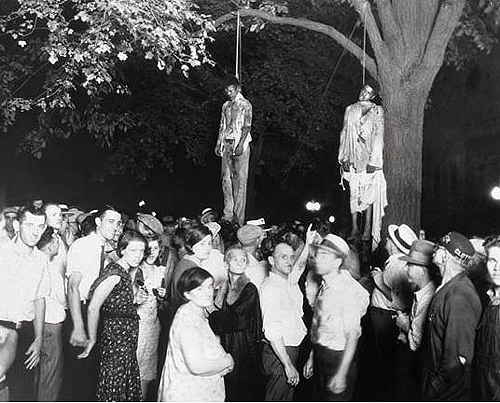
But having now finished his more recent work, The Cross and the Lynching Tree, I find myself stunned and shaken. Not because I didn’t know what Cone’s argument was before I began reading, and not that I didn’t know that I basically agreed with it already, which I did. (The argument in a nutshell: “The cross and the lynching tree interpret each other. . . . Can the cross redeem the lynching tree? Can the lynching tree liberate the cross and make it real in American history?” [p. 161]. Cone believes it can and powerfully shows why he does.)

No, the reason I find this work so shaking, so powerful is because it seems to be a work of memory that is truthful and profoundly hopeful at the same time. It dares to go all the way into the void and yet still call forth the transcendent hope of the transforming power of the Gospel to redeem the horrors and holocausts of history in their worst possible forms. And it doesn’t get much worse than the up close and frank stories of the lynched black bodies that are strewn across recent American history. His account the lynching of Mary Turner, a pregnant woman, wife to a lynched man named Hayes Turner will remain branded in my memory as one of the more horrifying stories I have ever read on a page (p. 120).

In the concluding section of the book, Cone really brings things together powerfully, in a way that frankly left me in awe (a rarity for conclusions of theological books). A few segments may help paint a picture:

As I see it, the lynching tree frees the cross from the false pieties of well-meaning Christians. When we see the crucifixion as a first-century lynching, we are confronted by the reenactment of Christ’s suffering n the blood-soaked history of African-Americans. Thus, the lynching tree reveals the true religious meaning of the cross for American Christians today. . . . Yet the lynching tree also needs the cross, without which it becomes simply an abomination. It is the cross that points in the direction of hope, the confidence that there is a dimension to life beyond the reach of the oppressor (p. 161-62).

What is so striking to me in Cone’s work here is the way in which faith is so palpably honest and real, clearly flowing from a life that has actually wrestled with the non-theoretical darkness and hopes for non-theoretical new life. This is a faith that is daring, a faith that screams “Why?” against oppression and slavery and cries “Hallelujah!” in hoping for a true transformation of life to come. This is a faith that actually looks for a transformation of victims and oppressors rather than simply an inversion of that diabolical relationship:

The cross of Jesus and the lynching tree of black victims are not literally the same—historically or theologically. Yet these two symbols or images are closely linked to Jesus’ spiritual meaning for black and white life together . . . Blacks and whites are bound together in Christ by their brutal and beautiful encounter in this land. Neither blacks nor whites can be understood without reference to the other because of their common religious heritage as well as their joint relationship to the lynching experience. What happened to blacks also happened to whites. When whites lynched blacks, they were literally and symbolically lynching themselves—their sons, daughters, cousins, mothers and fathers, and a host of other relatives. Whites may be bad brothers and sisters, murderers of their own black kin, but they are still our sisters and brothers. We are bound together in America by faith and tragedy. All the hatred we have expressed toward one another cannot destroy the profound mutual love and solidarity that flow deeply between us—a love that empowered blacks to open their arms to receive the many whites who were also empowered by the same love to risk their lives in the black struggle for freedom. No two people in America have had more violent and loving encounters than black and white people. We were made brothers and sisters by the blood of the lynching tree, the blood of sexual union, the blood of the cross of Jesus. No gulf between blacks and whites is too great to overcome, for our beauty is more enduring than our brutality. What God has joined together, no one can tear apart. (p. 165-66)

This, I think, is an authoritative word of a truthful faith. If James Cone can believe that, then I hope I can live towards the same daring faith, the same truthful memory. I hope we all can find our way towards it.

Remembering Mama Kelly

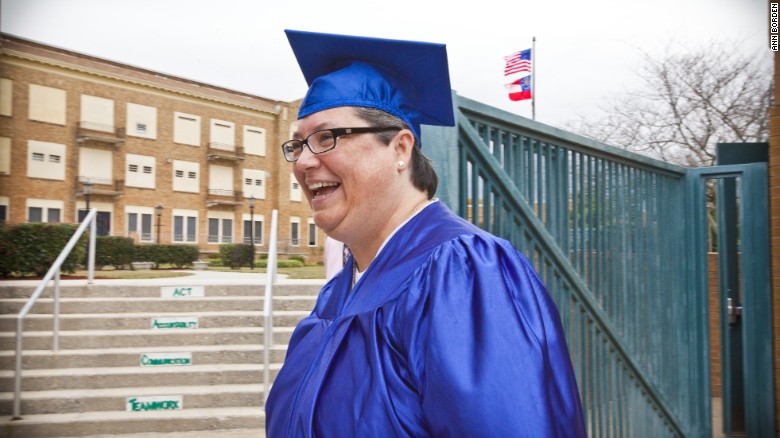
It was exactly one year ago that I spent about an hour or two recounting some poor version of the story of the life and death of Kelly Gissendaner. She had been murdered under the law by the State of Georgia on September 30th of that same year. I remembered Mama Kelly, as she was called by the many women and girls who she loved, nurtured, and cared for in prison as a saint, as one of the faithful followers of Jesus whom we celebrate in the small churches that I hail from every year around this time. I wanted to remember her again this year, a year later. Mama Kelly is countless news cycles behind us now, but the love, her love, Jesus’s love that she branded into the lives of so many lives on, as does the witness of her death at the hands of the state.

The New Testament speaks of Jesus’s death as putting the powers to shame, putting them on display: He disarmed the rulers and authorities and made a public spectacle of them, triumphing over them in [the cross]. (Col 2:15). Kelly follows Jesus in this. In her death at the hands of an implacable, resolute state intent on killing, her life of transformation, love and hope “make a public spectacle of them” as well. The story of her life, new life, and death speak to the truth that the powers of this world are intent on death rather than justice, and that even in the face of absolute newness of life they will continue to deal death.

But death has no enduring power against witness. Kelly’s witness lives in her words, in the lives of the women and girls who were prisoners with her, many of whom are alive and living now because “Mama Kelly” would sit with them in their times of darkness. Her witness is alive in the lasting impact she made on the theologians who were her teachers, alive in her children who were transformed along with her from hatred and bitterness into love and reconciliation.

All of this shames and scandalizes the gods of power. It puts the truth on full display and cuts through the lies of the powers of this present time, this present country. It shows the forth the hollow veneer that America’s legal and judicial system in fact is. It puts on display beauty of God’s justice, the justice of repentance, reconciliation, and new life. This is Kelly’s beautiful witness. That the new life that God brings to the world in Christ is more determinative than any sin or any crime we commit. That state disagrees, with cold lethal ferocity. Nevertheless, the witness stands, and continues to speak.

Kelly believed and lived unto the truth that God brings to us a future that is undetermined by the past. That in God there is hope and life and calling for us all, regardless of the chains of the past. Her life stands as witness to that truth. She bears, in her life, death and coming resurrection with Jesus, and with all of us the revelation of the Lamb that was slain, who is worthy to receive power. That is faithfulness worthy of celebration and remembrance.